
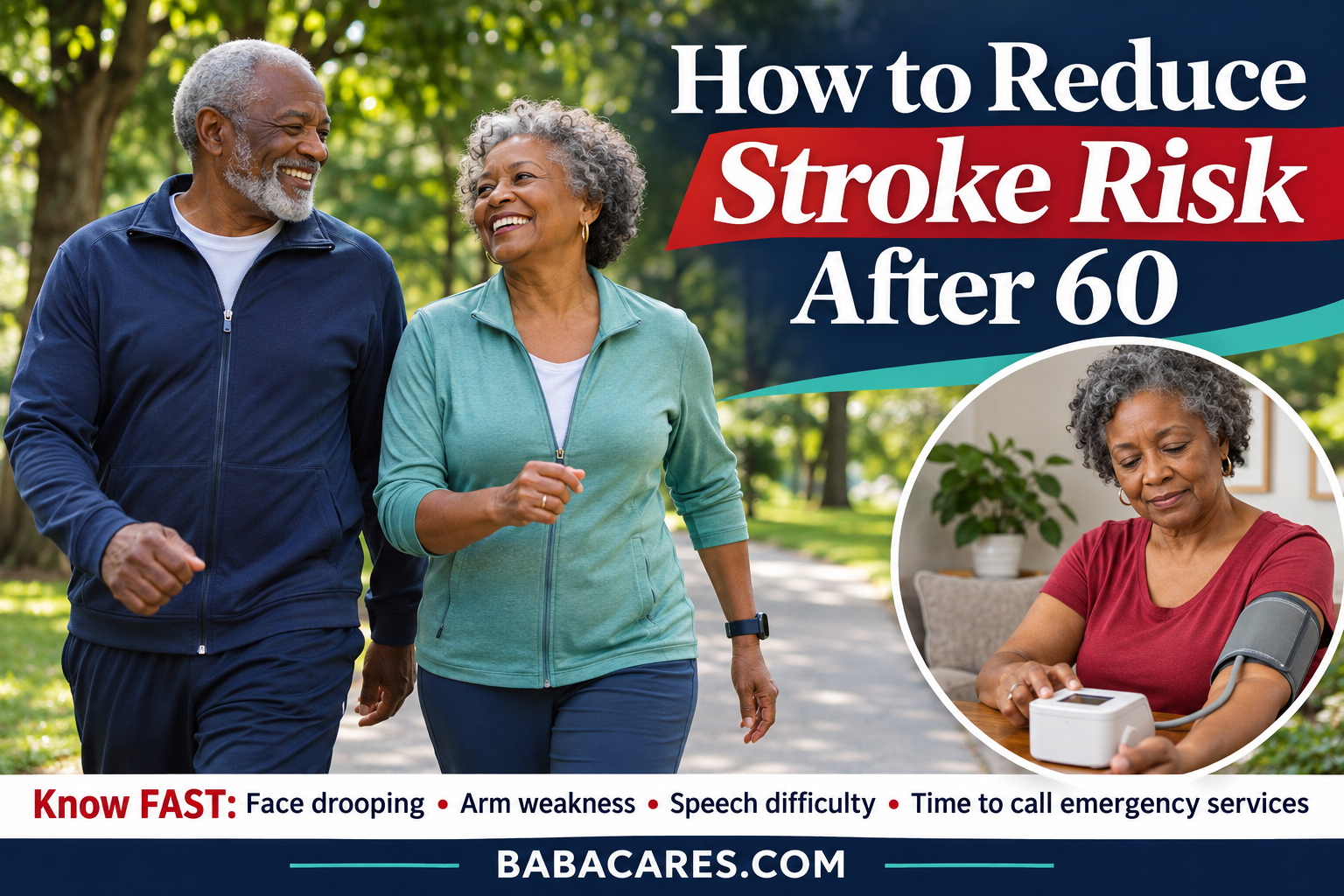
How to Reduce Stroke Risk After 60.
A stroke can happen suddenly and change a person’s life in seconds. It can affect movement, speech, memory, independence, and quality of life. For many older adults, stroke is one of the most feared health emergencies—and for good reason.
The risk of stroke increases with age, especially after 60. However, getting older does not mean a stroke is inevitable.
The encouraging news is that many strokes can be prevented.
By understanding the major risk factors and adopting healthy habits, older adults can significantly reduce their stroke risk and protect long-term brain health.
What Is a Stroke?
A Stroke occurs when blood flow to part of the brain is interrupted or reduced.
Without enough oxygen, brain cells begin to die within minutes.
There are two main types:
Ischemic Stroke
Caused by a blocked blood vessel in the brain.
This is the most common type.
Hemorrhagic Stroke
Caused by a ruptured blood vessel in the brain.
Both are medical emergencies.
Why Stroke Risk Increases After 60
As people age, several body changes increase stroke risk.
These include:
- stiffer blood vessels
- higher blood pressure
- greater plaque buildup in arteries
- slower metabolism
- increased chronic disease risk
Age raises risk, but lifestyle plays a major role too.
Major Risk Factors for Stroke
Common risk factors include:
- high blood pressure
- diabetes
- heart disease
- smoking
- obesity
- high cholesterol
- inactivity
- excessive alcohol
Relevant entities: Hypertension, Type 2 Diabetes, Cardiovascular Disease
Many of these risks can be managed.
How to Reduce Stroke Risk After 60
Here are practical ways to lower stroke risk.
1. Control Blood Pressure
High blood pressure is one of the strongest stroke risk factors.
It damages blood vessels over time.
Because hypertension often causes no symptoms, regular monitoring is essential.
Know your numbers.
Managing blood pressure can dramatically reduce stroke risk.
2. Stay Physically Active
Exercise improves circulation and supports heart health.
Regular movement helps:
- lower blood pressure
- improve cholesterol
- reduce weight
- improve blood sugar control
Helpful activities include:
- walking
- swimming
- cycling
- stretching
- strength training
Aim for consistent movement.
Relevant entities: Walking, Strength Training
3. Eat a Heart-Healthy Diet
Food strongly affects stroke risk.
Focus on:
- fruits
- vegetables
- whole grains
- lean protein
- nuts
- healthy fats
Limit:
- excessive salt
- processed foods
- sugary drinks
- trans fats
Good nutrition protects blood vessels.
4. Manage Diabetes
High blood sugar damages blood vessels.
People with diabetes have higher stroke risk.
If you have Type 2 Diabetes, work to control:
- blood sugar
- diet
- exercise
- medications
Diabetes management protects the brain.
5. Maintain Healthy Weight
Excess body weight increases risk of:
- hypertension
- diabetes
- heart disease
Weight control improves multiple stroke risk factors.
Even modest weight loss helps.
6. Stop Smoking
Smoking damages arteries and reduces oxygen delivery.
It increases clot formation and vessel damage.
Quitting smoking is one of the most powerful health decisions you can make.
7. Limit Alcohol
Excess alcohol can raise:
- blood pressure
- weight
- stroke risk
Moderation matters.
8. Manage Stress
Chronic stress affects both heart and brain health.
Stress may worsen:
- blood pressure
- sleep
- inflammation
Helpful stress-management tools include:
- prayer
- meditation
- deep breathing
- walking
- journaling
Protect emotional health.
9. Get Regular Medical Checkups
Do not wait for symptoms.
Routine screening can identify silent risks.
Important checks include:
- blood pressure
- cholesterol
- blood sugar
- heart rhythm
Early detection saves lives.
10. Know the Warning Signs of Stroke
Recognizing stroke symptoms early can save brain function.
Use FAST:
F — Face Drooping
One side of face droops.
A — Arm Weakness
One arm feels weak or numb.
S — Speech Difficulty
Speech becomes slurred or strange.
T — Time to Call Emergency Services
Act immediately.
Do not delay.
Every minute matters.
Final Thoughts
Stroke risk increases after 60, but many strokes can be prevented.
Protecting yourself means taking daily steps to control blood pressure, stay active, eat well, manage chronic conditions, and avoid harmful habits.
A healthy lifestyle protects both the heart and the brain.
Small choices made consistently can lower stroke risk significantly.
Your future brain health depends on the habits you build today.
Prevention is powerful.
Want to Learn More?
For more healthy-aging and wellness insights, search “Babajide Moronfolu” on Amazon and explore:
- Ageless Living: Unlock the Secrets to Staying Young as You Grow
- Do Not Grow Old Prematurely: Timeless Principles for Body, Mind, and Lifelong Vitality
References






Comments