

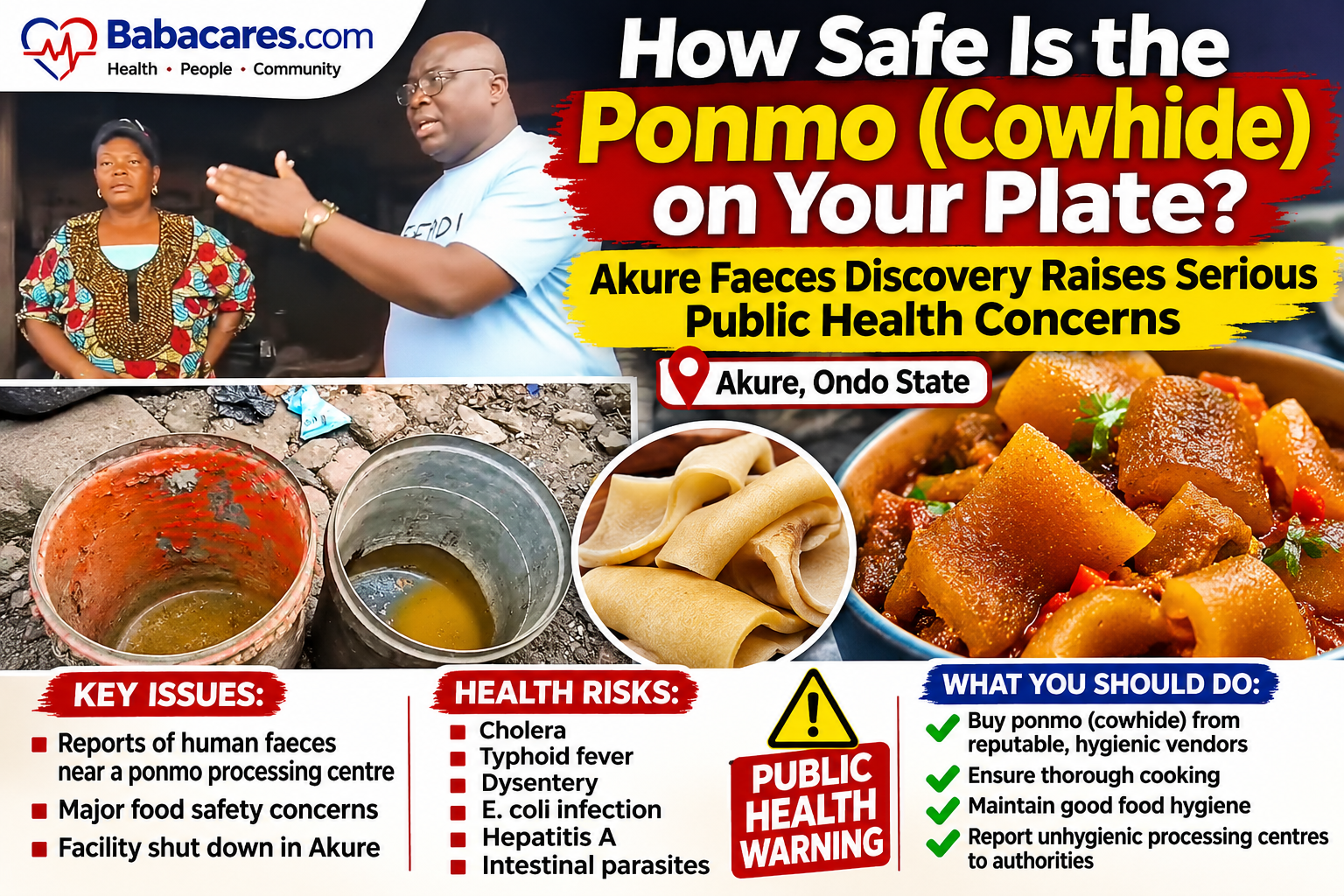
How Safe Is the Ponmo (Cowhide) on Your Plate? Akure Faeces Discovery Raises Serious Public Health Concerns.
The reported discovery of human faeces around an edible cowhide processing centre in Ondo State raises disturbing questions about food safety, environmental sanitation and consumer protection in Nigeria.
By Babajide Moronfolu | Babacares.com
For many Nigerians, a plate of amala, eba, pounded yam or rice is incomplete without a delicious piece of ponmo.
Known in English as edible cowhide or cow skin, ponmo is the processed skin of cattle prepared for human consumption. It is a popular delicacy in Nigeria, commonly served in soups, stews, restaurants and at social gatherings.
But how many of us know where the cowhide we consume comes from or the conditions under which it is processed?
A disturbing video shared on social media by Ondo Connect has brought this question to the forefront.
What Happened in Akure?
During an environmental sanitation exercise, officials of Akure South Local Government Area reportedly discovered buckets containing human faeces and containers of urine near a cowhide processing centre on Igboliki Street, Akure, Ondo State.
The local government chairman, Gbenga Fasua, reportedly ordered the closure of the establishment, while the operator was subsequently arraigned before an environmental court.
Although the discovery raises serious concerns, there is no laboratory evidence available to Babacares establishing that human waste was deliberately mixed with the cowhide or that consumers contracted illnesses from the facility.
Nevertheless, the reported conditions present a potentially serious public health threat.
Health Implications of Contaminated Ponmo
Human faeces can contain dangerous bacteria, viruses and parasites. These disease-causing organisms can contaminate cowhide through flies, dirty hands, unsafe water, contaminated equipment and unhygienic processing surfaces.
Consuming contaminated cowhide could expose individuals to:
-
Cholera: Severe diarrhoea and potentially life-threatening dehydration.
-
Typhoid fever: Prolonged fever, weakness and abdominal pain.
-
Dysentery: Diarrhoea accompanied by blood or mucus.
-
E. coli infection: Abdominal cramps, diarrhoea and possible kidney complications.
-
Hepatitis A: A viral infection affecting the liver.
-
Intestinal parasitic infections: Digestive problems and nutritional deficiencies.
Children, older adults, pregnant women and individuals with weakened immune systems may be particularly vulnerable to complications.
Can Boiling Ponmo Make It Safe?
Although thorough cooking can destroy many harmful microorganisms, it cannot guarantee the safety of grossly contaminated food.
Certain bacterial toxins and chemical contaminants may survive ordinary cooking. Cowhide can also become contaminated again after cooking.
Food safety must therefore begin at the processing centre, not in the consumer's cooking pot.
Public Health Warning to Nigerians
Babacares advises consumers to:
-
Purchase edible cowhide from reputable and hygienic vendors.
-
Avoid food sold near open gutters, sewage and refuse dumps.
-
Wash hands and cooking utensils thoroughly.
-
Use safe drinking water when preparing food.
-
Cook cowhide thoroughly.
-
Discard food suspected of contamination with human waste.
-
Report unhygienic food processing centres to environmental health authorities.
Anyone experiencing persistent vomiting, diarrhoea, fever, bloody stools or severe abdominal pain after consuming suspected contaminated food should seek medical attention promptly.
What the Nigerian Police Should Do
The closure of the processing centre should not necessarily mark the end of the investigation.
Babacares recommends that the Nigeria Police Force collaborate with environmental health officers, the Ondo State Ministry of Health and relevant food safety agencies to:
-
Investigate the circumstances surrounding the reported discovery of human waste.
-
Arrange laboratory examination of cowhide, water and other relevant samples.
-
Trace the distribution network to identify markets, restaurants and vendors supplied by the establishment.
-
Determine whether contaminated products reached consumers and whether a food recall is necessary.
-
Investigate other potentially unsafe cowhide processing centres.
-
Ensure appropriate prosecution where supported by evidence, while respecting due process.
-
Make the investigation's findings available to the public.
Beyond Akure: A Wake-Up Call for Nigeria
How many cowhide processing centres across Nigeria operate without regular inspections?
How many restaurants purchase ponmo without knowing where or how it was processed?
How many Nigerians are unknowingly exposing themselves to preventable foodborne illnesses?
Government authorities must intensify inspections of abattoirs, markets, restaurants and food processing establishments.
Access to clean water, adequate toilet facilities, proper waste disposal and food hygiene training should be fundamental requirements for food processing businesses.
The Babacares Position
This incident should not lead to the condemnation of every ponmo seller in Nigeria. Many vendors earn their livelihoods through legitimate and hygienic practices.
However, no commercial interest should take precedence over human life.
Food safety is not a luxury. It is a public health necessity.
The next time you enjoy a delicious piece of ponmo (cowhide), ask yourself: Do I know where it came from?
What we eat should nourish our bodies, not send us to the hospital.
Be informed. Be vigilant. Eat safely.
Read more on Babacares.com, subscribe and share. You could be saving someone's life.
References:
-
Ondo Connect — Social media footage of the reported incident.
-
Ondo State Radiovision Corporation — Reporting on the environmental court proceedings.
-
World Health Organization — Food Safety: https://www.who.int/news-room/fact-sheets/detail/food-safety
-
World Health Organization — Five Keys to Safer Food: https://www.who.int/activities/promoting-safe-food-handling/five-key-to-safer-food











Comments