

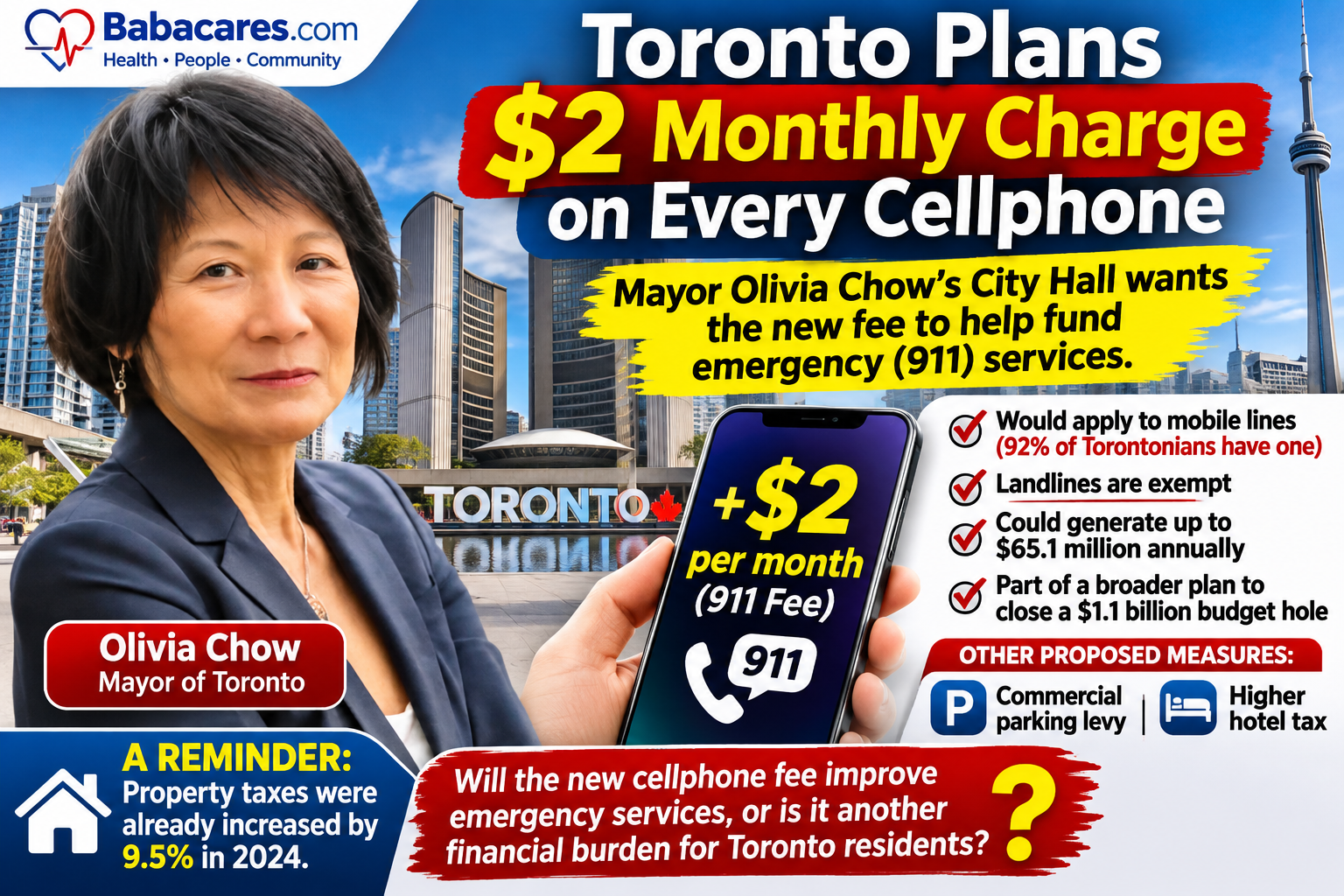
Toronto Proposes $2 Monthly Cellphone Fee: Funding Emergency Services or Adding to the Cost of Living?
As Toronto faces a projected $1.1 billion budget shortfall in 2027, a proposed cellphone levy raises questions about public safety, affordability and the financial well-being of residents.
By Babajide Moronfolu | Babacares.com
November 26, 2026
Imagine paying another government-imposed charge simply because you have a mobile phone.
That could soon become a reality for Toronto residents as city officials consider introducing a $2 monthly charge on wireless telephone lines to support emergency services.
The proposal, contained in a report scheduled for consideration by Mayor Olivia Chow's Executive Committee on December 1, 2026, forms part of a broader strategy to address Toronto's growing financial challenges.
However, the proposed charge has not yet been approved.
What Exactly Is Toronto Proposing?
The City of Toronto is considering introducing a Next Generation 911 (NG911) service fee, which would be collected through telecommunications companies and remitted to the city, subject to agreements with service providers.
Under the proposal:
-
Each mobile telephone line would attract a $2 monthly charge.
-
Landline telephones would be excluded.
-
The proposed implementation date is October 1, 2027.
-
The city could generate up to $65.1 million annually once fully implemented.
-
An estimated 92 per cent of Toronto residents have mobile phones.
The fee would apply to mobile telephone subscriptions rather than the physical ownership of a cellphone.
How Much Would Families Pay?
Although $2 may appear insignificant, the cumulative cost for households with multiple telephone lines could be considerable, particularly when added to other monthly expenses.
| Mobile phone lines | Monthly fee | Annual fee |
|---|---|---|
| 1 | $2 | $24 |
| 2 | $4 | $48 |
| 3 | $6 | $72 |
| 4 | $8 | $96 |
| 5 | $10 | $120 |
| 6 | $12 | $144 |
For families already struggling with rent, groceries, transportation, insurance and utility bills, every additional expense matters.
Why Does Toronto Need the Money?
Toronto faces a projected budget shortfall of approximately $1.1 billion in 2027.
City officials are exploring several revenue-generating measures, including:
-
The proposed $2 monthly cellphone fee.
-
An increase in the municipal accommodation tax from 6 per cent to 8.5 per cent, affecting hotels and eligible short-term accommodation.
-
A commercial parking levy proposed to begin in January 2029.
Toronto also implemented a combined residential municipal property tax and City Building Fund levy increase of 9.5 per cent in 2024.
The city argues that additional sustainable revenue sources are necessary to maintain essential public services and address increasing operational costs.
The Health and Public Safety Perspective
The proposed cellphone levy is intended to support the Next Generation 911 emergency communication system.
This modernised digital system is designed to improve emergency communications and support the future introduction of capabilities such as emergency text messaging.
For individuals experiencing heart attacks, strokes, breathing difficulties, serious injuries or other medical emergencies, reliable communication with emergency responders is extremely important.
Older adults, people living with disabilities and individuals with hearing or speech impairments could also benefit from more accessible emergency communication technology.
The proposed revenue would help support emergency call handling, dispatch systems, equipment, technology and training across police, fire and paramedic services.
However, additional funding alone does not guarantee faster emergency response times. Adequate staffing, effective management and accountability remain equally important.
Is a Cellphone Now a Necessity Rather Than a Luxury?
In today's society, mobile phones are no longer merely devices for making calls.
They are essential tools for:
-
Accessing healthcare and medical appointments.
-
Contacting emergency services.
-
Receiving prescription reminders.
-
Searching for employment.
-
Communicating with family members.
-
Accessing banking and government services.
-
Supporting community healthcare workers.
For many seniors, people living alone and individuals with medical conditions, a cellphone can be a lifeline.
This raises an important question: should an essential communication service attract another mandatory charge, or should emergency services be financed through existing taxation and government funding?
The Impact on Financial and Mental Well-Being
Financial stress is increasingly becoming a concern for many Canadian households.
Repeated increases in household expenses can contribute to anxiety, sleep disturbances, emotional distress and difficult financial decisions.
While a $2 monthly charge alone may not create significant financial hardship for most people, its cumulative effect alongside other rising expenses deserves consideration.
Particular attention should be given to low-income families, seniors on fixed incomes, unemployed individuals, students and people living with disabilities.
Questions Toronto Residents Deserve Answers To
Before making a final decision, Toronto City Council should provide clear answers to the following questions:
-
How will the revenue generated from the cellphone fee be spent?
-
Will the city publish annual reports showing how the funds are utilised?
-
What measurable improvements in emergency services should residents expect?
-
Could exemptions or financial relief be considered for vulnerable residents?
-
Have alternative funding arrangements with provincial and federal governments been adequately explored?
-
Could the proposed $2 charge increase in subsequent years?
Public consultation, transparency and accountability should accompany any additional financial obligation imposed on residents.
The Babacares Perspective
A reliable and efficient emergency response system is essential to protecting lives.
At the same time, affordability is an important component of individual, family and community well-being.
The challenge facing Toronto is finding a sustainable balance between financing essential public services and protecting residents from excessive financial pressure.
Whether the proposed cellphone fee represents a reasonable contribution to emergency services or an additional burden on struggling households deserves open and informed public discussion.
Would you be willing to pay an additional $2 every month on your cellphone bill to support Toronto's emergency services, or should the city explore alternative funding options?
Share your thoughts.
Read more on Babacares.com, subscribe and share.
Sources: City of Toronto official public notice and Executive Committee report; CityNews Toronto; Canadian Radio-television and Telecommunications Commission (CRTC); City of Toronto 2024 Budget.











Comments